
Montgomery County Criminal Court Records
The Montgomery County Circuit Clerk is the official record keeper and business manager for proceedings in District and Circuit Courts. Its Criminal divisions maintain the court-side file after a case begins. That file can include the complaint or indictment, warrant and bond entries, hearing events, motions, pleas, orders, disposition, sentence, probation terms, costs, and appeal notices. A jail booking entry is not the same file.
District Criminal handles misdemeanors and DUI tickets outside Montgomery city limits, worthless-check matters, conservation tickets, Revenue Commission citations, and ABC violations. Felonies also begin there until grand-jury disposition. Circuit Criminal handles felony cases and misdemeanor appeals from District Court and City of Montgomery Municipal Court. Municipal offenses inside city limits generally remain on the city court track unless a felony or sheriff incident changes jurisdiction.
Search Montgomery County Criminal Cases
Use Alacourt Access for official Alabama Circuit and District case information. The paid service supports defendant-name and case-number searches. A case detail report can show court actions, status, settings, party information, financial history, and a detailed case action summary. A name or case-number search is listed at $9.99, and document images cost $5 for the first 20 pages plus $0.50 per page after that.
- Decide whether the matter is a county misdemeanor, felony, municipal case, or only an arrest or warrant entry.
- Search Alacourt by the court case number when known. Otherwise use the defendant's name and verify the court and division.
- Read each listed charge with its status. Then check settings, actions, rulings, plea, disposition, and financial entries.
- Contact the Montgomery County Circuit Clerk for a certified copy, an older file, or an item not offered online.
- Use ALEA's fingerprint-based process only when a statewide criminal-history review or challenge is needed.
The clerk is at 251 South Lawrence Street, Montgomery, AL 36104, and can be reached at (334) 832-1260 from 8:00 am to 5:00 pm, Monday through Friday. Mail goes to P.O. Box 1667, Montgomery, AL 36102-1667. The court's general email is only for proposed orders or materials specifically authorized by court staff.
Montgomery Criminal Case Stages
The local Circuit Criminal division identifies investigation, arrest, prosecution, indictment, arraignment, pretrial detention or bail, plea bargaining, trial or adjudication, sentencing, and appeals as parts of the criminal process. Not every case completes every stage. A dismissal, no bill, acquittal, plea, or diversion can alter the path.
Case flow: Charges Filed › Arraignment › Pretrial / Motions › Plea or Trial › Disposition › Sentencing
| Stage | What the Montgomery County Record May Show |
|---|---|
| Charges Filed | A complaint, warrant, indictment, charge description, or related entry opens or advances the case. |
| Arraignment | The accused hears the charge and enters a plea. |
| Pretrial / Motions | Settings, continuances, motions, rulings, and bail events build the action summary. |
| Plea or Trial | The docket records a plea, trial events, verdict, or adjudication. |
| Disposition | The court records how each charge ended. |
| Sentencing | The file may show confinement, probation, restitution, costs, or a split sentence. |
What Montgomery Criminal Records Show
The most useful reading method is field by field. Confirm the case number and court first, then compare each filed charge with its plea and disposition. Setting dates show the schedule, while the case action summary supplies the chronology. Financial entries can include court costs, fines, and other recorded amounts.
| Field | What It Shows |
|---|---|
| Case Number | The identifier assigned to the District or Circuit file. |
| Defendant and Parties | The accused and other entered participants or counsel. |
| Case Type / Court | The criminal division and Circuit or District venue. |
| Charges | The accusations filed and later status changes. |
| Settings and Actions | Hearing dates, rulings, continuances, and other docket events. |
| Plea | The defendant's response to a charge when entered. |
| Disposition | The final recorded result for the charge or case. |
| Sentence | Confinement, probation, restitution, costs, or related orders where entered. |
| Documents | Paid images or attachments available through Alacourt. |
Discovery does not belong to the Montgomery Circuit Clerk's criminal file. The local court says it must be obtained through appointed or retained counsel. Police reports, body-camera files, witness statements, or lab evidence therefore may not appear even if the docket confirms that the prosecution is active.
Montgomery Charges Versus Convictions
A filed charge is an accusation. A conviction is an outcome based on a guilty plea or adjudication. One Montgomery County criminal case can contain several charges with different results, including dismissal, acquittal, plea, or conviction. Read every charge row instead of treating the case caption or arrest entry as the final result. The arrest-to-charge record provides more detail on booking and formal charge status.
| Point | Charge | Conviction |
|---|---|---|
| Meaning | A formal accusation | A guilty plea or adjudication |
| Timing | Appears near the start and may change | Appears as a disposition |
| Possible Record Path | Pending, amended, reduced, dismissed, or nolle prosequi | May lead to sentence, costs, probation, or appeal |
| What It Proves | Only that an accusation was filed | The recorded guilty outcome for that count |
Read Montgomery Case Outcomes
Disposition means the result of a charge or case. An acquittal is a not-guilty judgment. Dismissal ends a matter without trial, while nolle prosequi means the prosecutor chose not to proceed further. A guilty plea or guilty finding may be followed by sentencing. A sentence can be concurrent, meaning served at the same time as another sentence, or consecutive, meaning served one after another. A split sentence combines confinement with a suspended or probation portion.
Probation is supervised release instead of, or following, confinement. Restitution compensates a victim. Costs and fines are separate financial entries. Appeals can add later activity after a disposition and sentence. Always match the result to the individual count because the case-level status can conceal different outcomes among several charges.
Docket timing also affects interpretation. Each Montgomery Circuit Criminal judge sets an individual docket, and hearing notices go to appointed or retained counsel. An online setting is useful for tracking the file, but counsel should confirm what the defendant must do. A continuance postpones a setting; it is not a disposition. Discovery is exchanged through counsel and stays outside the clerk record even while motions, hearings, and rulings about the case appear in the action summary.
For misdemeanors, confirm whether the conduct occurred inside or outside Montgomery city limits. Outside-city misdemeanors can route to District Criminal. City offenses generally use Municipal Court. A felony tied to the same incident can change that routing. Searching the wrong court can produce an empty result that says nothing about whether another official system holds the record.
Montgomery County Prosecution Services
The Montgomery County District Attorney serves the Fifteenth Judicial Circuit and identifies Azzie Oliver as District Attorney. The office lists Grand Jury, Juvenile, Domestic Violence, Pre-Trial Diversion, Restitution, Victim Services, Child Support, Worthless Check, and other divisions.

The official office page helps distinguish the prosecutor's role from the Circuit Clerk's duty to maintain the court file.
The DA's Victim Services Unit supports victims before, during, and after court processing.

Victim Services provides forms and restitution affidavits and explains rights to notice of proceedings, charges, release, bond, appeal status, and other events.
The Montgomery County Public Defender is at 305 South Lawrence Street, Montgomery, AL 36104. Requests for help may be made by phone or in writing at 334-265-1783 or toll free at 844-457-8053. Counsel, not the public docket, is the route for defense discovery.
Montgomery Sealed Versus Expunged Records
A seal or confidentiality rule blocks ordinary public access to specified material. Expungement is a statutory court process for qualifying records. Under either condition, an online search may return no result even though an event once occurred. Some authorized court or criminal-justice uses may remain after expungement, so public invisibility should not be described as physical destruction of every record.
| Point | Sealed / Confidential | Expunged |
|---|---|---|
| Source | Statute, court rule, or order | Qualifying petition and court order under Alabama law |
| Public Search | Record or protected fields may be withheld | Public-facing access is restricted if granted |
| Eligibility | Depends on the record and governing restriction | Depends on charge type, disposition, timing, and statutory conditions |
| Next Step | Ask the clerk about authorized access | Verify the current Circuit Clerk checklist and service requirements |
Montgomery Criminal Record Access Laws
Alabama Code Section 15-27-1 addresses possible expungement of qualifying misdemeanor, violation, traffic, boating, and municipal-ordinance records.
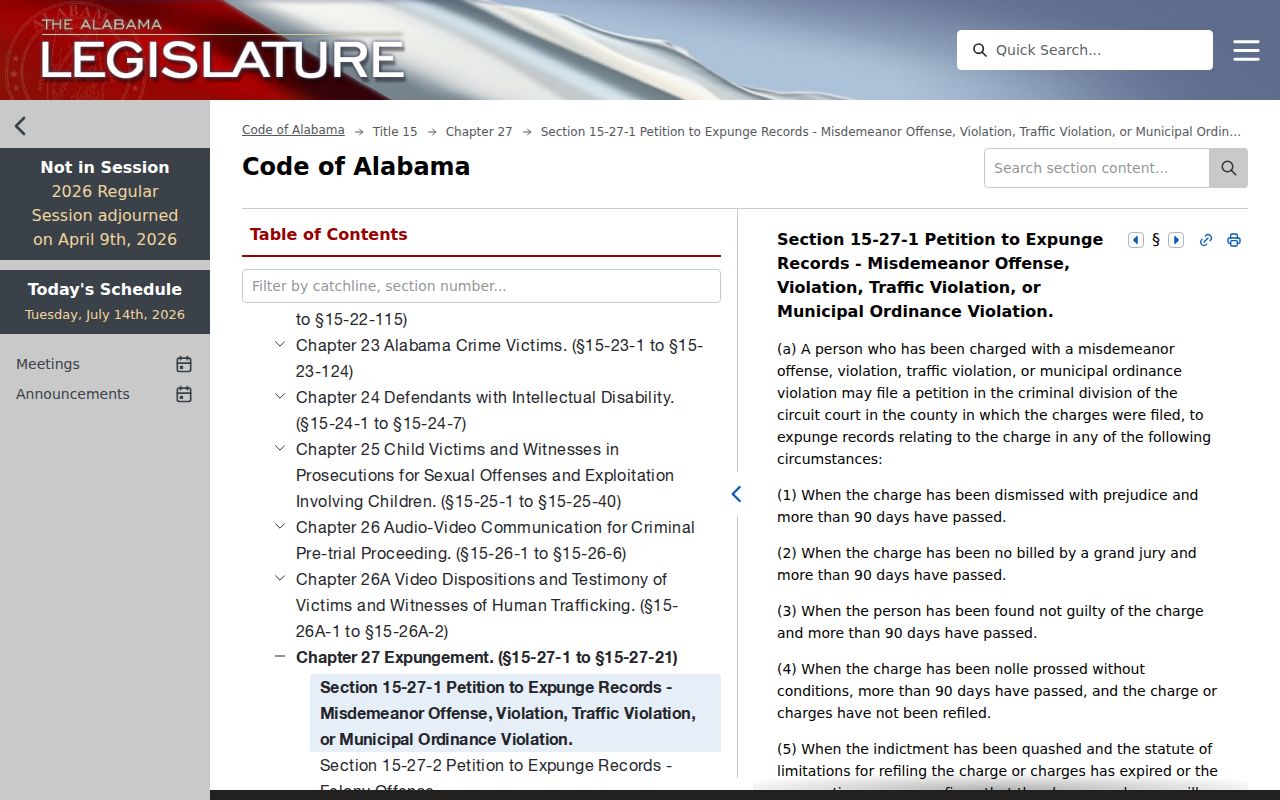
The statute sets conditions, so a dismissed or resolved misdemeanor does not vanish from public access automatically.
Alabama Code Section 15-27-2 covers listed circumstances for felony-charge expungement.
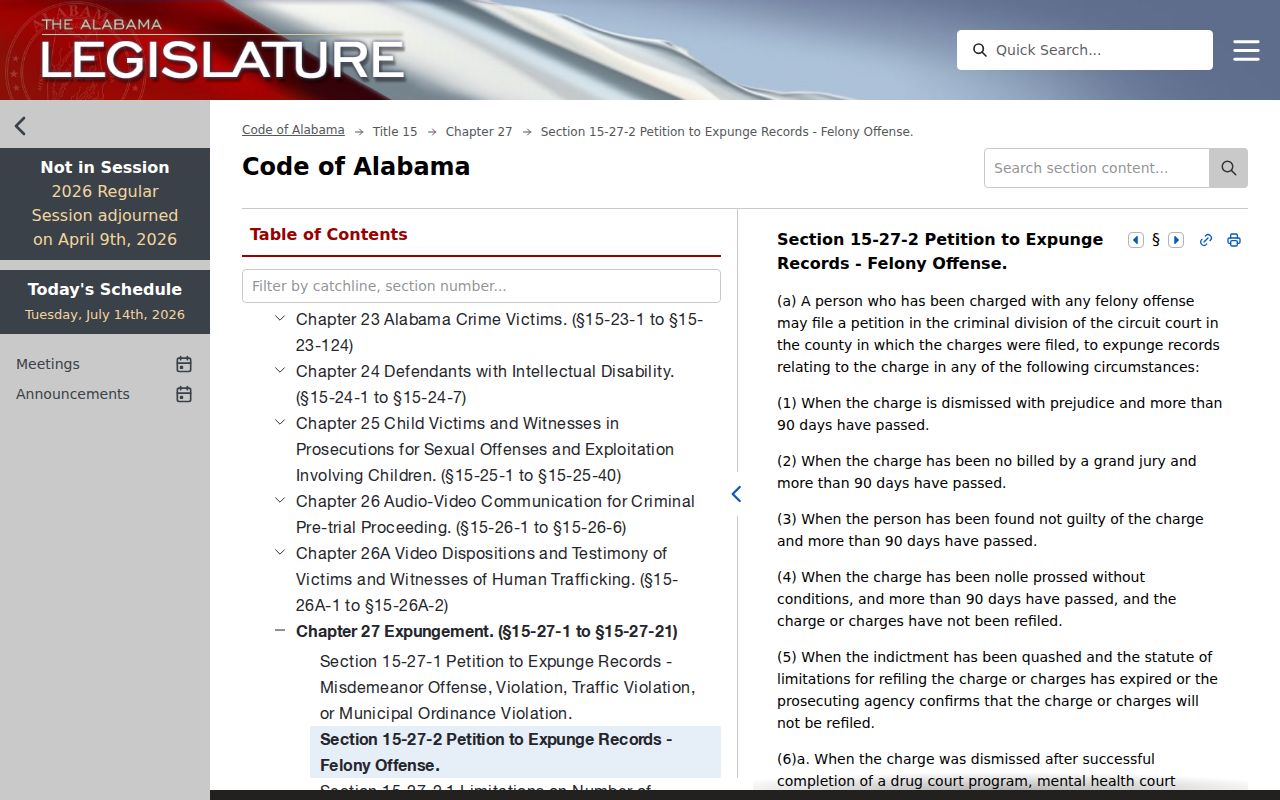
A Montgomery petition is filed in Circuit Court in the county where the charge was filed, subject to current eligibility and procedure.
Restricted Montgomery Criminal Records
Alabama Code Section 12-15-133 makes juvenile legal and social files confidential except as authorized.
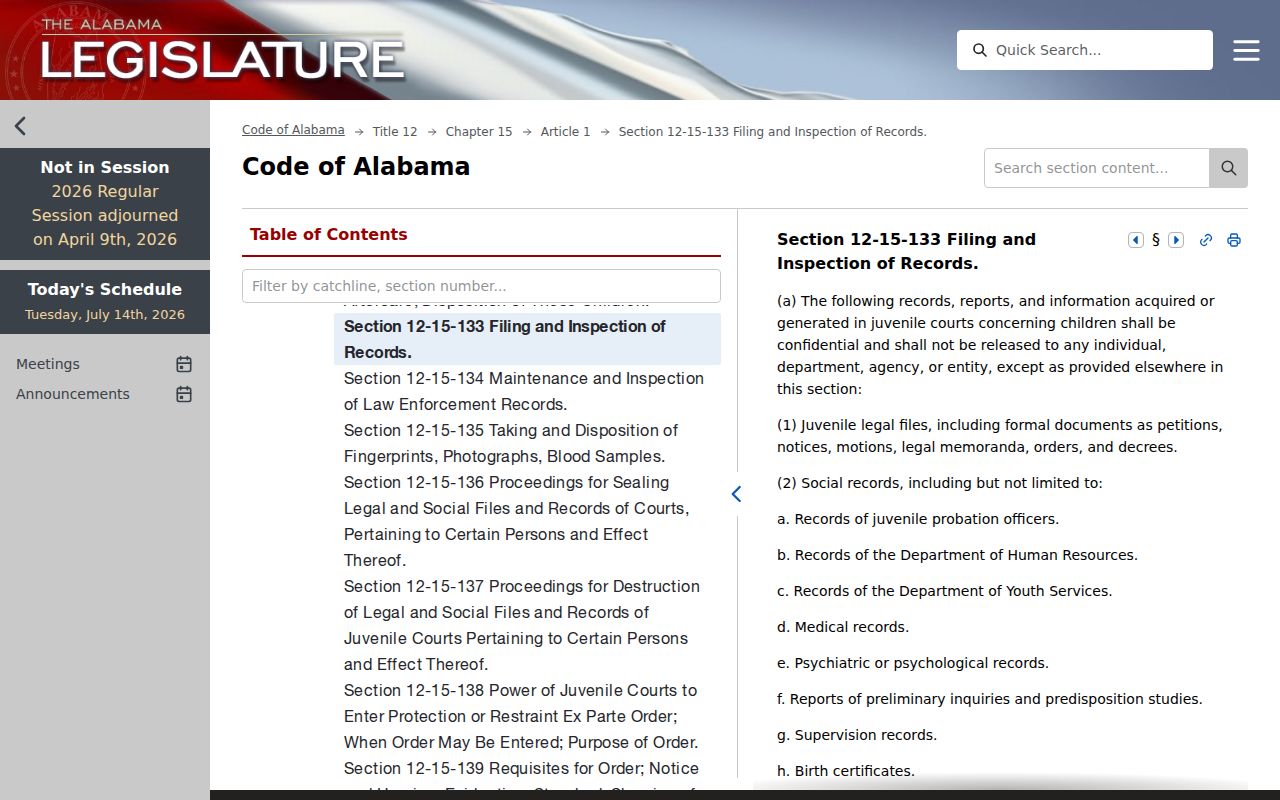
Ordinary users should not expect public docket access to juvenile delinquency, probation, dependency, or related social records.
Alabama Code Section 26-10E-30 protects adoption hearings and records.
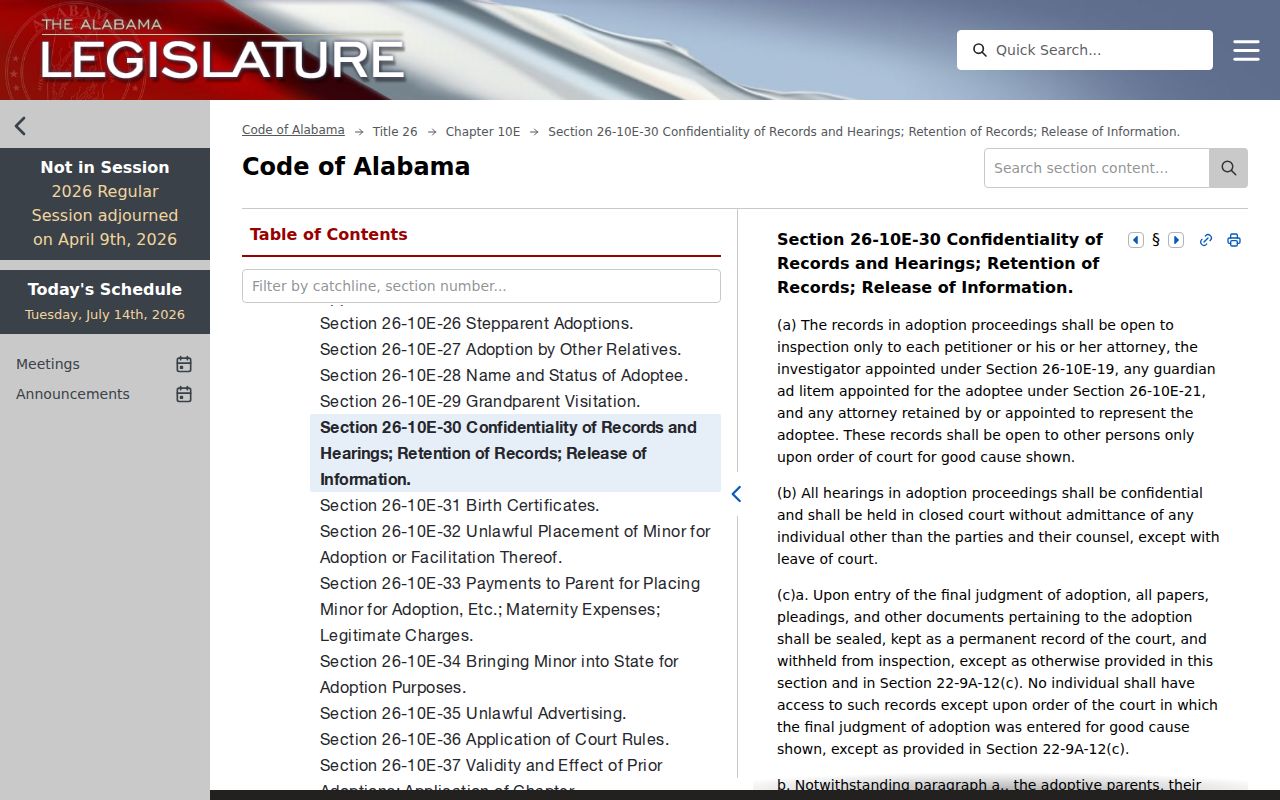
Criminal court copies can also redact Social Security numbers, account numbers, protected minor information, and similar identifiers. Sealed and expunged files remain outside ordinary public results.
Note: No public result may reflect a restriction, expungement, wrong court, name mismatch, or incomplete online coverage.